 The stock market stock exchange is a place where stocks, shares, and other long-term commitments or investment are bought and sold. The economic significance of a stock market results from the increased marketability resulting from a stock exchange share quotation. The stock exchange is an essential institution for the existence of the capitalist system of the economy and for the smooth functioning of the corporate form of organization.
The Securities Contracts (Regulation) Act of 1-956 defines, a stock exchange as “an association, organization or body of individuals, whether incorporated or not, established for the purpose of assisting, regulating and controlling, business in buying, selling and dealing in securities.”
Stock Exchanges are noted as “an essential concomitant of the Capitalistic System of the economy. It is indispensable for the proper functioning of the corporate enterprise. It brings together large amounts of capital necessary for the economic progress of a country. It is a citadel of capital and pivot of the money market. It provides the necessary mobility to capital and indirect the flow of capital into profitable and successful enterprises. It is the barometer of general economic progress in a country and exerts a powerful and significant influence as a depressant or stimulant of business activity.”
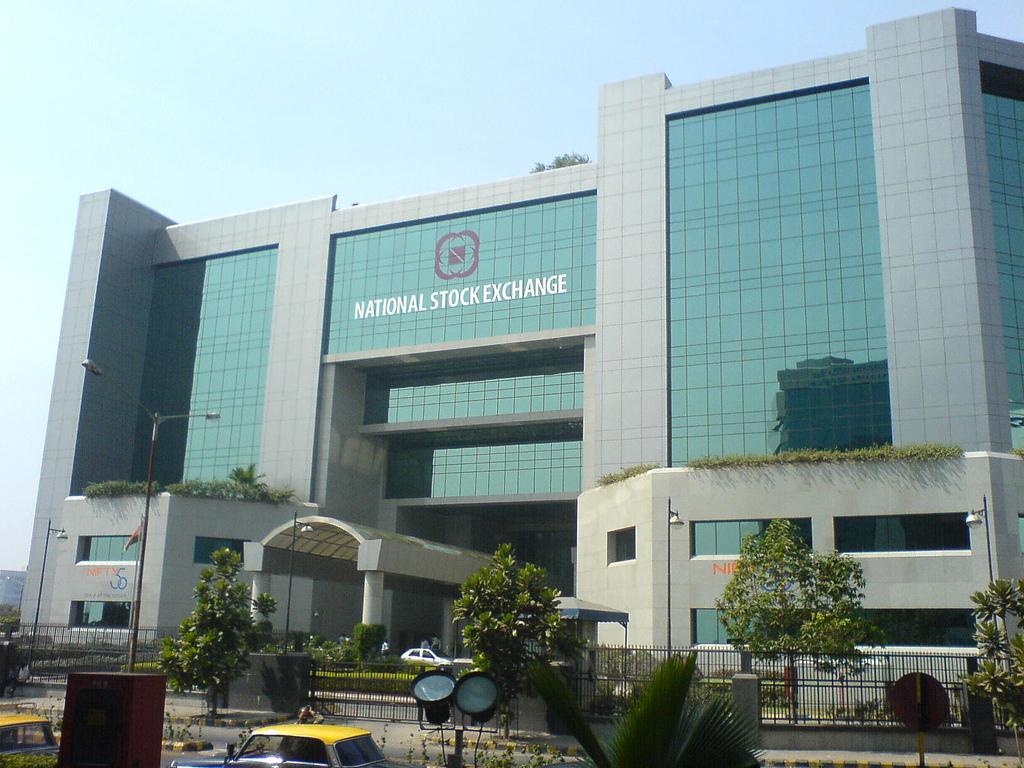
Established stock market stock exchange in India
The first organized stock exchange in India was started in 1875 at Bombay and it is stated to be the oldest in Asia. In 1894 the Ahmedabad Stock Exchange was started to facilitate dealings in the shares of textile mills there. The Calcutta stock exchange was started in 1908 to provide a market for shares of plantations and jute mills.
Then the Madras stock exchange was started in 1920. At present, there are 24 stock exchanges in the country, 21 of them being regional ones with allotted areas. Two others set up in the reform era, viz., the National Stock Exchange (NSE) and Over the Counter Exchange of India (OICEI), have the mandate to have nation-wide trading.
They are located at Ahmedabad, Vadodara, Bangalore, Bhubaneswar, Mumbai, Kolkata, Kochi, Coimbatore, Delhi, Guwahati, Hyderabad, Indore, Jaipur’ Kanpur, Ludhiana, Chennai Mangalore, Meerut, Patna, Pune, Rajkot.
The Stock Exchanges are being administered by their governing boards and executive chiefs. Policies relating to their regulation and control are laid down by the Ministry of Finance. The government also Constituted Securities and Exchange Board of India (SEBI) in April 1988 for orderly development and regulation of securities industry and stock exchanges.

 Financial Technology